
This map shows where weather is most comfortable across the United States during May, based on Perfect Weather Index scores averaged across recent years.
Scores combine temperature, sunshine, humidity, and wind to highlight regions that consistently offer the most pleasant outdoor conditions for the month.
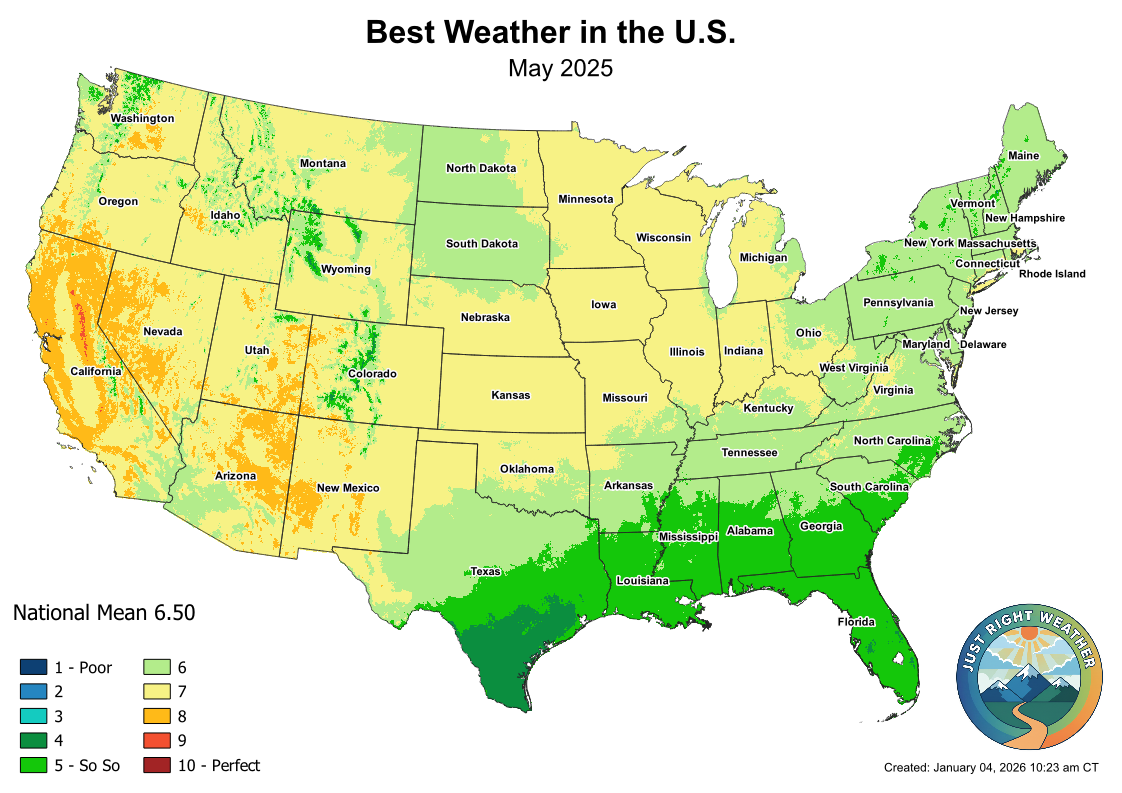
May favors regions that warm into spring conditions while avoiding sustained heat, high humidity, or frequent storm activity. The desert Southwest loses some of its winter dominance as temperatures rise, while higher elevations and the Midwest emerge as strong alternatives.
California leads the nation in May. Higher elevations along the Sierra Nevada and coastal areas offer ideal conditions — warm, sunny, and dry before summer heat takes hold inland. The western slopes of the Sierras in particular hit their seasonal peak in May.
Nevada and Utah perform well as higher-elevation areas of the Great Basin and Colorado Plateau warm into comfortable spring conditions without yet facing summer extremes.
The Midwest — particularly the Corn Belt from Kansas to Iowa — hits its spring sweet spot in May. Mild temperatures, lower humidity, and increasing sunshine make this one of the best months of the year for the region before summer heat and humidity take over.
May is also an excellent month for mountain national parks, which are fully accessible at lower elevations before summer crowds arrive. Eastern national parks are in full spring form, and desert parks like the Grand Canyon and Zion are still comfortable before summer heat peaks.
(Based on statewide average Perfect Weather Index scores.)
May is an excellent month for travel, but destination choice matters more than in April. Higher elevations of the West, the Midwest, and interior portions of the Pacific Northwest offer the most reliable comfort. For the Plains and South, earlier spring months generally offer better conditions before heat and storms increase.
For a detailed look at how May 2025 specifically played out, see the May 2025 weather recap.
Data Note:
This analysis is based on National Weather Service forecast data and represents modeled conditions, not verified observations. Results reflect relative comfort patterns for May and may vary from year to year.