A forecast-based guide to choosing the most comfortable mountain park by season.
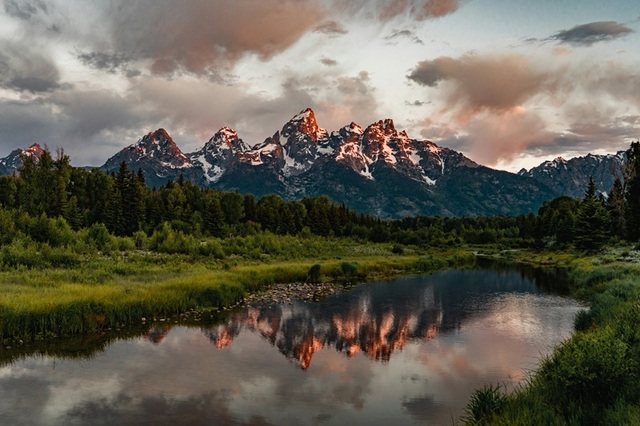
Mountain national parks operate on a completely different comfort calendar than desert parks. Elevation moderates summer heat but shortens the warm season. Snowpack, shoulder seasons, and rapid weather shifts play a much larger role in outdoor comfort.
Using the Perfect Weather Index (PWI), we evaluate mountain parks by forecast-based comfort, accounting for temperature, wind, cloud cover, humidity, and precipitation.
Mountain national parks are shaped primarily by elevation. Higher altitude lowers average temperatures, shortens the warm season, and delays spring snowmelt compared to lower-elevation parks. In many mountain parks, snowpack can linger into late May or June, shifting the best hiking conditions into late summer rather than spring.
Elevation also increases weather variability. Daily temperature swings are larger, afternoon thunderstorms are more common in mid-summer, and wind exposure is stronger along ridgelines and alpine terrain. Even when forecast highs appear mild, wind and rapid cooling can significantly affect outdoor comfort.
Because of these elevation-driven patterns, the best time to visit mountain national parks depends less on avoiding heat and more on balancing trail access, snowmelt timing, and storm frequency. The best weather often occurs in late summer or early fall, when trails are clear, temperatures are moderate, and weather patterns become more stable.
Higher altitude reduces peak summer temperatures. Parks above 6,000–8,000 feet rarely experience the extreme heat found in lower desert basins.
Unlike desert parks, which perform strongly in spring and fall, mountain parks typically peak in late summer when snow has melted and daytime temperatures are mild.
Late-season snow can reduce comfort and accessibility well into May or even June at higher elevations.
Mountain environments experience faster weather transitions. Afternoon thunderstorms, strong winds, and sudden temperature drops are more common than in lower-elevation parks.
Because of these factors, mountain weather is less about avoiding heat and more about balancing snowmelt timing with stable summer conditions.
| Park | Best Month | Spring Weather Pattern | Summer Weather Pattern | Fall Weather Pattern |
|---|---|---|---|---|
| Bryce Canyon National Park | September | Moderate – lingering snow early | Excellent – mild and dry | Excellent – stable and cool |
| Great Basin National Park | September | Moderate – variable snowpack | Excellent – balanced temperatures | Excellent – crisp and dry |
| Rocky Mountain National Park | July | Limited – snow persists at elevation | Excellent – peak alpine access | Very Good – cooler but scenic |
| Glacier National Park | September | Limited – heavy snowpack lingers | Excellent – short peak season | Excellent – stable and less crowded |
Best Overall Month reflects peak seasonal comfort based on PWI analysis.
This snapshot helps you quickly identify which mountain park aligns best with your travel window before diving into detailed park pages.
Mountain national parks are often described as “best in summer,” but forecast-based comfort rankings show a more refined pattern. While July and August provide reliable access and open trails, September frequently produces the most consistently high comfort scores across multiple high-elevation parks.
Here’s how the seasons compare:
Spring in mountain national parks is highly transitional. Lower elevations begin warming, but higher terrain often remains snow-covered well into late May. Trail access can be limited, and snowmelt can create muddy conditions at mid-elevations.
Temperatures are generally cool and stable, but comfort scores often remain moderate rather than high due to lingering snowpack, wind exposure, and variable access. Parks such as Glacier National Park and Rocky Mountain National Park may still have significant alpine closures during this period.
Spring can be rewarding for solitude, but it is rarely the peak comfort season in high-elevation parks.
Summer represents the primary access window for most mountain parks. Snow has largely melted from major trails, alpine roads reopen, and daytime temperatures remain moderate even during regional heat waves.
Because elevation suppresses extreme heat, parks such as Bryce Canyon National Park and Glacier National Park often deliver comfortable afternoon highs compared to lower desert environments.
However, mid-summer introduces convective thunderstorm patterns in many mountain regions. Afternoon storms, localized heavy rain, and gusty winds can reduce comfort scores, especially in July.
Summer is strong for accessibility and overall reliability, but not always the most stable season.
September frequently produces the highest sustained comfort scores across mountain national parks.
Key advantages include:
Parks like Glacier National Park and Bryce Canyon National Park often reach peak balance during early fall, when alpine conditions remain accessible but summer instability fades.
In many high-elevation parks, September edges out August as the single best overall month.
Winter significantly reduces overall weather conditions in mountain parks due to cold temperatures, snow accumulation, wind exposure, and limited access to higher elevations.
While scenic and ideal for snow-based recreation, winter conditions lower general outdoor comfort scores compared to late summer and early fall. Many alpine roads close, and backcountry access becomes restricted without specialized equipment.
Winter can be exceptional for specific activities, but it is rarely the broad “best time to visit” for general hiking and sightseeing comfort.
Best overall month across many mountain parks: September
Mountain parks reward precise seasonal timing. Forecast-based rankings help identify not just when trails are open — but when temperatures, storm frequency, and broader weather patterns align for the most stable conditions.
Rocky Mountain National Park sits well above 7,500 feet, with alpine terrain exceeding 12,000 feet. Snowpack often lingers into late spring, delaying full trail access until early summer. July and August provide the most reliable access window, but afternoon thunderstorms are common during peak summer.
September frequently produces the most stable weather pattern, with cooler temperatures, fewer storms, and fully open high-elevation routes. Early fall often represents the strongest overall balance of good weather and fewer crowds.
→ See full Rocky Mountain weather rankings and seasonal breakdown
Yellowstone operates on a short high-elevation season. Spring can remain cold and unsettled, with lingering snow in higher terrain. Summer brings broader access and moderate daytime temperatures, though convective storms and variable winds are common.
July often delivers Yellowstone’s most consistent weather window, with reduced storm frequency and warm temperatures. Unfortunately, July is also Yellowstone's busiest month. Outside of the busy summer season, some fine days can still be expected after Labor Day, but days will rapidly cool into October.
→ See full Yellowstone weather rankings and best month analysis
Yosemite’s weather profile varies significantly by elevation. Yosemite Valley warms earlier than the high country, while Tuolumne Meadows and other alpine zones may remain snow-covered into late spring.
Summer provides broad access across elevations, though temperatures in the Valley can become warm during regional heat waves. October frequently delivers Yosemite’s most balanced weather, combining moderate daytime temperatures with reduced thunderstorm activity and stable patterns.
Elevation variation makes timing especially important, particularly if visiting both the Valley and high country during the same trip.
If you're planning beyond desert parks, these guides help you compare comfort conditions across regions and seasons:
See how desert parks compare to all U.S. national parks over the next 7 days using forecast-based Perfect Weather Index scores.
→ View National Park Weather Rankings
Planning ahead? Explore which parks consistently perform best by season.
→ See Best Weather by Month
Compare desert heat patterns with high-elevation parks where snowpack and altitude dramatically shift comfort timing.
→ Explore Desert National Park Weather
Humidity, storm patterns, and seasonal variability create a different comfort profile across eastern parks.
→ Explore Eastern National Park Weather
Understand how temperature, wind, humidity, cloud cover, and precipitation combine into a 1–10 comfort score.
→ Learn How Rankings Are Calculated