This map shows where weather is most comfortable across the United States during August, based on Perfect Weather Index scores averaged across recent years.
Scores combine temperature, sunshine, humidity, and wind to highlight regions that consistently offer the most pleasant outdoor conditions for the month.
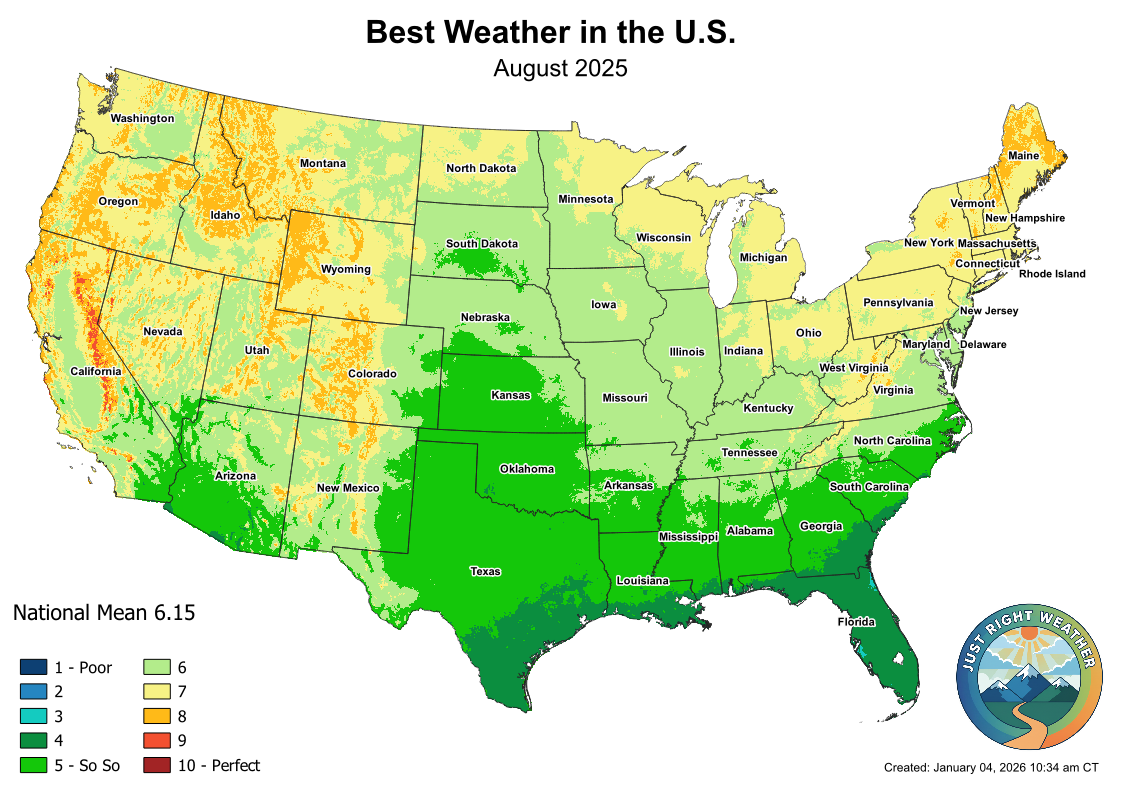
August rewards locations that combine higher elevation, northern latitude, lower humidity, and reduced temperature extremes. These factors offset peak summer heat, allowing certain regions to maintain consistently comfortable conditions while much of the country remains weather-challenged.
Maine and New Hampshire shine in August. As summer progresses, temperatures moderate, humidity decreases, and coastal influences become increasingly favorable. August is one of the best months of the year for weather comfort in northern New England.
Wyoming and Montana continue to perform well. The Rocky Mountains deliver cooler nights, lower humidity, and frequent sunshine — some of the most reliable outdoor weather in the country during late summer.
Idaho rounds out the top tier, benefiting from the same high-elevation, low-humidity combination that makes the northern Rockies a summer standout.
August is an excellent month for mountain national parks. Yellowstone and Rocky Mountain National Park are fully accessible and at their summer best, while Yosemite and the High Sierra remain excellent at elevation. Acadia National Park in Maine is also a top August destination, combining coastal scenery with some of the most comfortable summer weather on the East Coast.
(Based on statewide average Perfect Weather Index scores.)
August is the month to head north or up in elevation. Northern New England and the Rocky Mountains offer the most reliable comfort, with the Sierra Nevada close behind. The Gulf Coast, Deep South, and desert Southwest remain the most challenging destinations for comfortable outdoor conditions.
For a detailed look at how August 2025 specifically played out, see the August 2025 weather recap.
Data Note:
This analysis is based on National Weather Service forecast data and represents modeled conditions, not verified observations. Results reflect relative comfort patterns for August and may vary from year to year.