
This map shows where weather is most comfortable across the United States during March, based on Perfect Weather Index scores averaged across recent years.
Scores combine temperature, sunshine, humidity, and wind to highlight regions that consistently offer the most pleasant outdoor conditions for the month.
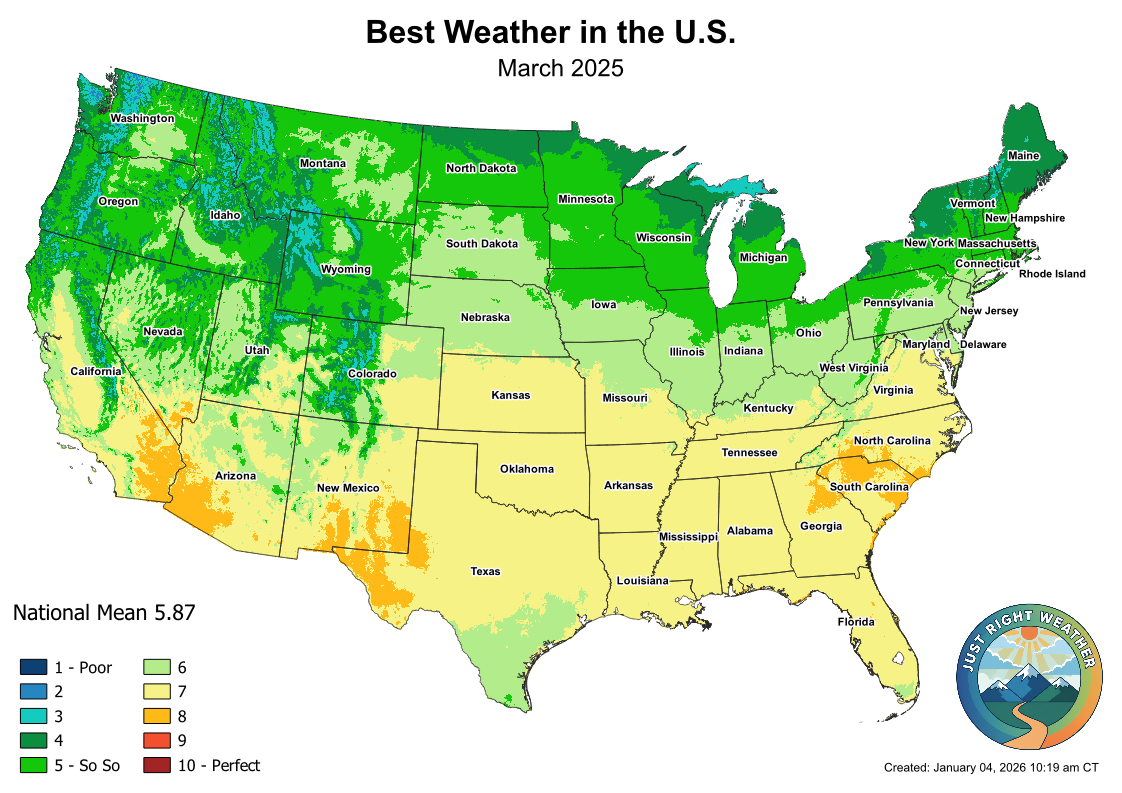
March favors regions where warming temperatures arrive before summer humidity and storm activity become common. The desert Southwest continues to lead, but the Southeast begins to emerge as a strong performer as temperatures moderate and cold fronts become less frequent.
Arizona remains a top performer in March. Dry air, light winds, and increasing daylight combine to create excellent outdoor conditions in lower-elevation desert areas. March is often one of the most comfortable months in the desert before summer heat begins to build.
Southern California’s deserts also shine in March, with warm but not hot daytime temperatures, low humidity, and frequent sunshine making it one of the best outdoor destinations in the country.
Texas improves significantly in March as the Southern Plains warm and cold outbreaks become less frequent, pushing it into the top tier of states for overall comfort.
March is one of the best months to visit desert national parks. The Grand Canyon and Zion offer ideal hiking conditions — mild temperatures, good visibility, and far fewer crowds than peak spring and summer. Eastern national parks also begin to come alive in March as the Southeast warms up.
(Based on statewide average Perfect Weather Index scores.)
March is one of the most rewarding months for weather-driven travel. The desert Southwest remains the most reliable destination, but the Southeast and Southern Plains offer increasingly comfortable conditions as spring arrives. It's also the last comfortable month in the desert before summer heat limits outdoor activity.
For a detailed look at how March 2025 specifically played out, see the March 2025 weather recap.
Data Note:
This analysis is based on National Weather Service forecast data and represents modeled conditions, not verified observations. Results reflect relative comfort patterns for March and may vary from year to year.