
This map shows where weather is most comfortable across the United States during February, based on Perfect Weather Index scores averaged across recent years.
Scores combine temperature, sunshine, humidity, and wind to highlight regions that consistently offer the most pleasant outdoor conditions for the month.
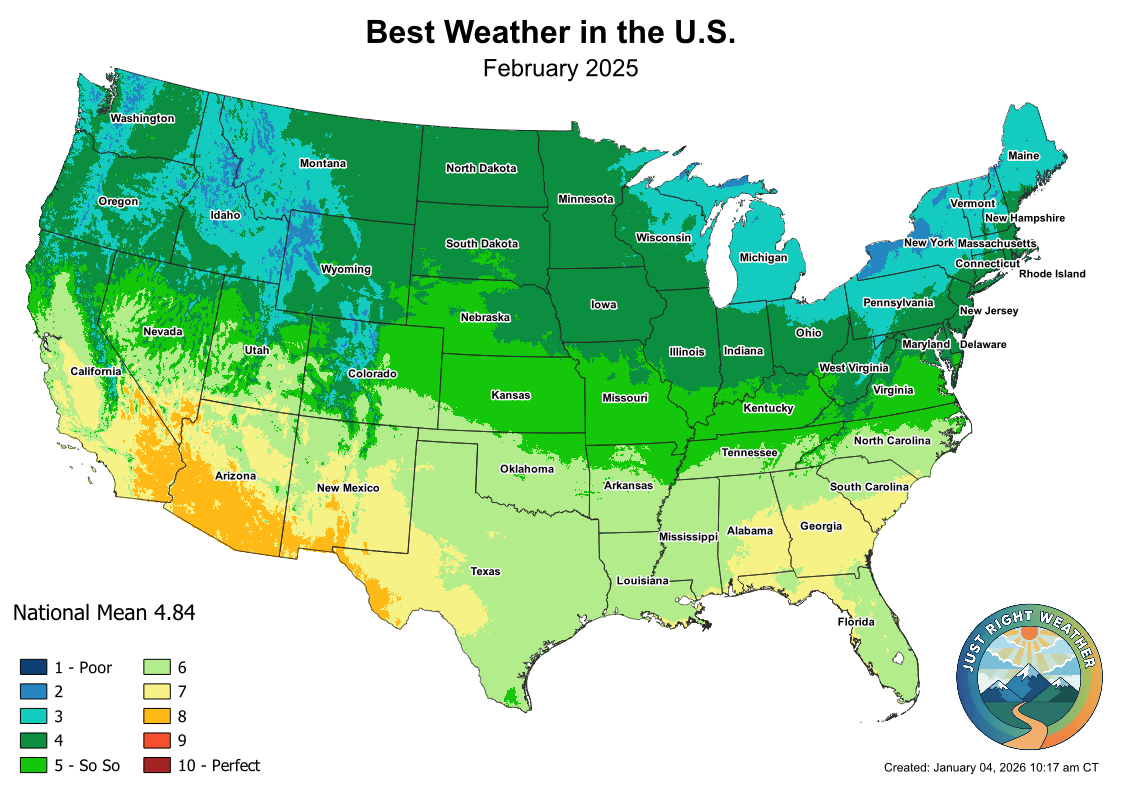
During February, much of the southern U.S. avoids prolonged cold outbreaks while still remaining cool enough to prevent heat or humidity discomfort. These regions often sit between Arctic air masses to the north and subtropical moisture to the south, creating long stretches of dry, mild late-winter weather.
Southern Arizona continues to lead the country in February. Desert areas from Lake Havasu to Tucson maintain mild daytime temperatures, low humidity, and abundant sunshine. February often brings slightly warmer afternoons than January while storm systems remain infrequent.
Desert California ranks a close second, with lower-elevation areas delivering dry air, frequent clear skies, and comfortable daytime temperatures ideal for outdoor activity.
Georgia — particularly its southern portions — also ranks well in February. Cold fronts become less frequent and temperatures moderate compared to January, making it one of the stronger performers east of the Mississippi.
February is also a good window to visit desert national parks before spring crowds arrive. The Grand Canyon and Zion both see comfortable lower-elevation conditions with far fewer visitors than peak season.
(Based on statewide average Perfect Weather Index scores.)
If you're planning outdoor activities or travel in February, the desert Southwest remains the most reliable destination for comfortable weather. Compared to January, February offers modest improvements across parts of the southern U.S. — but truly favorable conditions are still geographically limited.
For a detailed look at how February 2025 specifically played out, see the February 2025 weather recap.
Data Note:
This analysis is based on National Weather Service forecast data and represents modeled conditions, not verified observations. Results reflect relative comfort patterns for February and may vary from year to year.