Great Smoky Mountains is the most visited national park in the United States — and one where timing your visit can mean the difference between a magical experience and bumper-to-bumper congestion. October is the clear weather winner with 80% PWI and 5 perfect days, but it's also the single most crowded month of the year. Using Perfect Weather Index (PWI) scores calculated from daily National Weather Service forecast data, this page shows exactly when conditions are most comfortable — and how to balance weather quality against the park's enormous visitor numbers.
Current Perfect Weather Index scores for the next 7 days at Great Smoky Mountains National Park. Higher scores indicate more comfortable outdoor conditions. Updated daily using National Weather Service forecast data.
| Loading… |
|---|
| Loading… |
How to use this: Days with higher scores are generally better for hiking and outdoor activities, with more comfortable temperatures, lighter winds, and fewer weather impacts. → View official National Weather Service forecast for Great Smoky Mountains
October is the best month to visit Great Smoky Mountains based on Perfect Weather Index scores — 80% PWI with 5 perfect days. But October is also the park's most visited month, drawing over 1.5 million visitors.
Based on Perfect Weather Index (PWI) data from the Gatlinburg entrance area — drawing on NWS forecast records and historical climate normals — the Smokies show a pattern familiar to the Southern Appalachians: mild shoulder seasons bookending a humid summer, with fall delivering the strongest combination of comfortable temperatures and spectacular scenery. March and November stand out as underrated months — strong PWI scores with far fewer visitors than spring or fall peak periods. These seasonal patterns are consistent with long-term climate data for the western North Carolina and east Tennessee mountains.
Raw monthly totals were normalized into monthly PWI scores (percent of possible points) and paired with the number of rare Perfect 10 days.
Monthly PWI scores reflect the percentage of possible comfort points earned near the Gatlinburg entrance area across all days in each month, derived from National Weather Service forecast data and consistent with long-term climate normals for the region. Perfect 10 days are days scoring a full 10 out of 10 on the PWI scale.
| Month | Monthly PWI Score | Perfect 10 Days | What It Means | Verdict |
|---|---|---|---|---|
| January | ~60% | 0 | Cold, quiet, limited high-elevation access | Caution |
| February | ~69% | 2 | Cool but improving, very low crowds | Good |
| March | ~77% | 4 | Spring transition, frequent great days | Very Good |
| April | ~76% | 0 | Mild but variable, showers common | Very Good |
| May | ~71% | 2 | Warm, greener, humidity rising | Good |
| June | ~65% | 0 | Warm, humid, storms increase | Caution |
| July | ~66% | 0 | Hot, very humid, storm-prone | Caution |
| August | ~71% | 0 | Still humid, slightly improving | Good |
| September | ~76% | 2 | Drier, cooler, excellent hiking | Very Good |
| October ⭐ | ~80% | 5 | Peak conditions, very reliable | Excellent |
| November | ~76% | 1 | Cool, crisp, quieter trails | Very Good |
| December | ~69% | 0 | Cold but stable, light crowds | Good |
PWI scores based on NWS forecast data at the Gatlinburg entrance area (~1,500 ft). Clingmans Dome and high-elevation areas above 6,000 ft are significantly cooler and score differently.
Average monthly visitor counts at Great Smoky Mountains National Park (2019–2023 average, source: NPS). The Smokies are the most visited national park in the U.S. — October peak crowds exceed 1.5 million visitors. The weather-to-crowds tradeoff is stark: March and November offer strong PWI scores with dramatically fewer visitors than peak months.
| Month | % of Annual Visitors | Avg Visitors | Crowd Level |
|---|---|---|---|
| January | 3% | 407,804 | Low |
| February | 4% | 472,412 | Low |
| March | 7% | 872,124 | Moderate |
| April | 8% | 951,189 | Moderate |
| May | 10% | 1,266,832 | High |
| June | 11% | 1,378,182 | High |
| July | 11% | 1,385,854 | Peak |
| August | 9% | 1,150,247 | High |
| September | 8% | 1,015,889 | High |
| October ⭐ | 12% | 1,510,684 | Peak |
| November | 8% | 1,016,062 | High |
| December | 6% | 764,555 | Moderate |
Source: National Park Service visitor use statistics, 2019–2023 average.
October is the Smokies' top-scoring month at 80% PWI with 5 perfect days — and simultaneously the most visited month in the most visited national park in the U.S., drawing over 1.5 million visitors. Fall foliage typically peaks in mid-October at higher elevations and late October at lower elevations, creating some of the most spectacular scenery in the eastern United States. If you visit in October, expect congestion on Newfound Gap Road and at popular overlooks — arrive early or visit on weekdays.
March scored 77% PWI with 4 perfect days — the second-highest perfect day count of any month, behind only October. Yet March draws less than half of October's visitors. Spring wildflowers begin appearing by mid-March, particularly at lower elevations where trillium and serviceberry bloom early. The park feels fresh and uncrowded, trails are clear of snow on most days, and the combination of comfortable temperatures and dramatic mountain mist makes March one of the most atmospheric months to visit.
September (76% PWI, 2 perfect days) marks the return of comfortable conditions as summer humidity eases and temperatures moderate. Crowds begin dropping from summer peak. November (76% PWI, 1 perfect day) delivers crisp, clear days with bare trees that open up long-distance views typically hidden by summer foliage. Both months are significantly less crowded than October while delivering strong PWI scores.
April (76% PWI) and May (71% PWI, 2 perfect days) bring the Smokies' famous spring wildflower season. The park contains one of the most diverse wildflower displays in North America — over 1,500 flowering plant species. Peak bloom typically runs March through May depending on elevation. Visitor numbers rise steadily through spring, with May crossing 1.2 million visitors. Weather is variable with frequent showers but interspersed with beautiful days.
June (65%) and July (66%) are the lowest-scoring months of the year. Summer in the Southern Appalachians combines genuine heat with high humidity and frequent afternoon thunderstorms. Higher elevations like Clingmans Dome are cooler and more comfortable than the valley floor, but the overall summer experience at the Smokies is significantly less comfortable than fall or spring. Despite this, summer draws the park's highest monthly visitor totals — June and July together account for 22% of annual visits.
Winter at the Smokies is cold but milder than most mountain parks. PWI scores range from 60% in January to 69% in February and December. Higher elevation roads including the Clingmans Dome road close in winter, but Newfound Gap Road typically stays open in all but the worst conditions. Visitor numbers drop significantly, making winter one of the quietest times to visit. February's 2 perfect days and improving temperatures make it a surprisingly appealing month for those who don't mind cool weather.
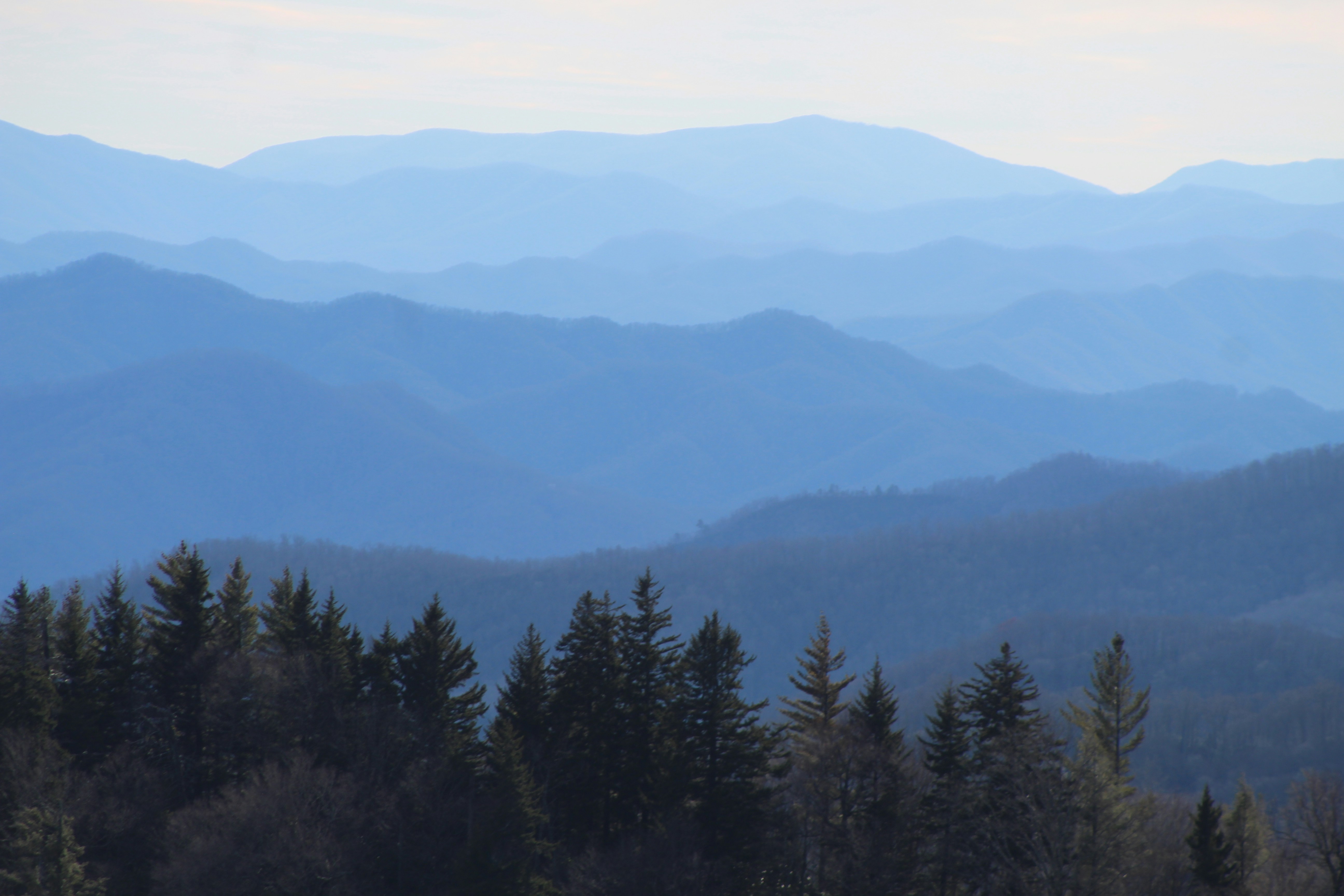
The Great Smoky Mountains span a dramatic elevation range — from 875 feet at the park boundary to 6,643 feet at Clingmans Dome. Weather varies significantly with elevation, and the famous "smoke" — the blue-gray haze the mountains are named for — affects visibility throughout the year but is most pronounced in summer.
The Smokies receive among the highest rainfall of any area in the eastern U.S. — Gatlinburg averages around 55 inches annually, while higher elevations receive considerably more. Summer thunderstorms are frequent and can develop rapidly on hot, humid afternoons. The characteristic mountain haze is caused by volatile organic compounds released by the dense tree cover — it's entirely natural and has been present for thousands of years, long before the park was established.
What is the best time to visit Great Smoky Mountains National Park?
October delivers the highest PWI scores — 80% with 5 perfect days — but also the heaviest crowds of any month. For the best balance of weather and manageable visitor numbers, March and November are the standout choices: both score 76–77% PWI with significantly fewer visitors. If fall foliage is the goal, early October at higher elevations and late October in the valleys is worth the crowds for many visitors.
How bad are the crowds at Great Smoky Mountains?
The Smokies draw more visitors than any other U.S. national park — over 12 million annually. October alone sees 1.5 million visitors, and summer months regularly exceed 1.3 million each. Unlike many national parks, there is no entry fee and no reservation system for general access, which means crowds are self-regulating only by congestion. Popular areas like Cades Cove, Laurel Falls, and Alum Cave Trail can have significant wait times for parking on weekends in peak season. Arriving before 9am and visiting on weekdays dramatically improves the experience.
When does fall foliage peak at Great Smoky Mountains?
Fall foliage at the Smokies typically peaks in mid-October at higher elevations (above 4,000 ft) and in late October at lower elevations and valley floors. The color progression moves downslope over several weeks, meaning the park offers foliage viewing across a longer window than most destinations. Clingmans Dome and the high ridges turn first, followed by Newfound Gap, and finally the Gatlinburg and Cades Cove areas. Peak timing varies by year depending on temperature and rainfall patterns through summer.
When are the wildflowers best at Great Smoky Mountains?
The Smokies host one of the most diverse wildflower displays in North America, with over 1,500 flowering plant species. Peak bloom runs from late March through May depending on elevation — lower valleys like Cades Cove and the Oconaluftee River area bloom first, with higher elevations following through May. Trillium, wild geranium, and fire pink are among the most striking species. The park hosts a wildflower pilgrimage each spring, typically in late April, with guided hikes focused on specific bloom areas.
What is the best time to visit Great Smoky Mountains for international visitors?
October offers the best weather but the highest crowds — worth it for the fall foliage if planned well in advance. March is the best-kept secret: strong PWI scores, wildflowers beginning at lower elevations, and a fraction of peak-season visitors. The Smokies are easily reached from Knoxville (about 45 minutes) or Asheville (about 1.5 hours), both served by regional airports with connections to major hubs. Many visitors combine the Smokies with the Blue Ridge Parkway for a scenic multi-day Appalachian road trip.
What is the Perfect Weather Index?
The Perfect Weather Index (PWI) is a daily comfort score from 1–10 calculated from National Weather Service forecast data. It combines temperature, sunshine, humidity, wind, and precipitation into a single rating. A score of 8 or higher means genuinely excellent outdoor conditions. Scores below 4 reflect cold, storms, or other conditions that significantly limit outdoor comfort. Learn more about how the PWI works →